
The Basic Income Grant (BIG) is one of the most discussed social support proposals in South Africa. With rising unemployment, high living costs, and economic inequality, many South Africans are looking to the Basic Income Grant as a long-term solution to poverty and financial insecurity.
This guide explains what the Basic Income Grant is, how it works, who may qualify, and the current status of BIG in South Africa.
What Is the Basic Income Grant?
The Basic Income Grant (BIG) is a proposed form of regular cash support paid by the government to individuals who have little or no income. Unlike traditional social grants, a basic income grant is designed to:
- Be unconditional
- Provide monthly financial support
- Reduce extreme poverty
- Support unemployed adults who fall outside existing grants
In South Africa, the BIG proposal builds on the experience of the Social Relief of Distress (SRD) Grant, which was introduced during the COVID-19 pandemic.
Why South Africa Is Considering a Basic Income Grant
South Africa faces persistent socio-economic challenges, including:
- High unemployment rates, especially among youth
- Rising food and transport costs
- Limited access to formal employment
- Millions of adults not covered by existing grants
The Basic Income Grant is seen as a way to provide dignity, stability, and basic financial security to vulnerable citizens while stimulating local economies.
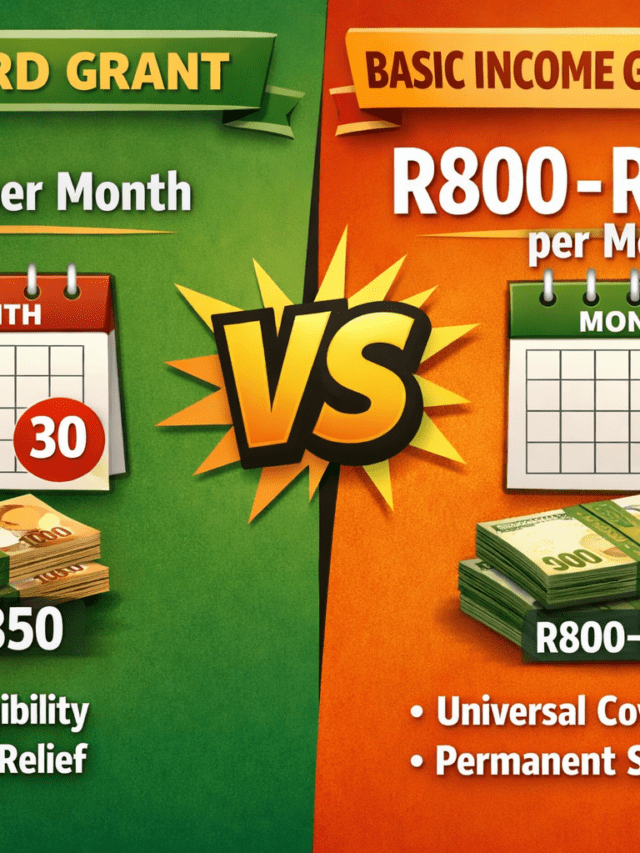
Relationship Between BIG and the SRD Grant
The South African Social Security Agency (SASSA) Social Relief of Distress (SRD) Grant, administered by South African Social Security Agency, currently provides temporary relief to unemployed adults who do not receive other social grants.
Many policymakers view the SRD Grant as a foundation or pilot for a future Basic Income Grant, with the key difference being that BIG would be permanent rather than temporary.
READ THIS: SASSA Grant Payment Dates for 2026 (Monthly Schedule)
Who Would Qualify for the Basic Income Grant?
Although the Basic Income Grant has not yet been fully implemented, proposals suggest eligibility could include:
- South African citizens or permanent residents
- Adults aged 18 to 59
- Individuals who are unemployed or earn below a set income threshold
- People not receiving other social grants
Final eligibility rules would depend on government legislation and funding models.
How Much Would the Basic Income Grant Pay?
There is no officially confirmed amount yet. However, discussions and proposals have mentioned monthly payments ranging from:
- R350 (aligned with the SRD Grant)
- R585 (food poverty line)
- R1,000 or more (to better reflect the cost of living)
The exact amount would depend on budget availability and economic impact assessments.
Benefits of a Basic Income Grant
Supporters of the BIG argue that it could:
- Reduce poverty and hunger
- Improve mental health and well-being
- Encourage job seeking and entrepreneurship
- Boost small businesses through increased consumer spending
- Reduce crime linked to economic desperation
Studies from pilot projects globally show that basic income grants often support productivity rather than reduce it.
Concerns and Challenges
Despite its benefits, the Basic Income Grant faces challenges such as:
- Funding and sustainability
- Increased pressure on the national budget
- Risk of inflation if poorly implemented
- Administrative and fraud-prevention systems
These concerns are currently being evaluated by policymakers and economic experts.
Current Status of the Basic Income Grant in South Africa
As of now, South Africa has not officially implemented a permanent Basic Income Grant. However:
- The Social Relief of Distress (SRD) Grant continues to be extended
- Government departments are conducting feasibility studies
- Civil society organisations are lobbying for permanent income support
- Public consultations and policy discussions are ongoing
Any formal rollout would be announced by the government and implemented through Department of Social Development.
READ THIS TOO: SASSA SRD Grant Guide (2026): Eligibility, Application, Payment Dates & Status Checks
Is the Basic Income Grant a Loan?
No. The Basic Income Grant is not a loan and does not need to be repaid. It is a form of social assistance aimed at meeting basic needs. However, beneficiaries should be cautious of unregistered lenders who claim to offer “loans against grants.”
Final Thoughts
The Basic Income Grant represents a potential shift in South Africa’s approach to social welfare. While it is not yet permanent policy, the continued extension of the SRD Grant shows growing recognition of the need for income support for unemployed adults.
As discussions continue, staying informed through credible sources and official announcements is essential.
Disclaimer
zar-loans.co.za is an informational platform and is not a financial service provider or government entity. Information provided is for educational purposes only and should not be considered financial or legal advice.